

Deploy the emnify Consumer eSIM Global on Microsoft Intune
This guide walks you through deploying and activating the emnify Consumer eSIM Global using Microsoft Intune. It covers checking device compatibility, enrolling supported devices, ordering eSIM profiles, activating eSIMs remotely using Intune’s cellular plan management capabilities, and configuring the APN.
Step 1: Check device and OS compatibility
Before proceeding, ensure that your devices meet the minimum OS requirements for Microsoft Intune:
- Android
- User-based management: Android 10.0 and later
- User-less management methods: Android 8.0 and later
- iOS
- iOS 16.X and later
For the full list, see Operating systems and browsers supported by Microsoft Intune.
Step 2: Enroll your devices in Microsoft Intune
Devices must be enrolled in Microsoft Intune before you can deploy or activate an eSIM.
Choose your enrollment method based on device type and organization requirements:
- Overview: Microsoft Intune enrollment
- Enroll Android devices
- Enroll Windows client devices
- Enroll iOS and iPad OS devices
- Enroll macOS devices
For assistance, contact your assigned Microsoft Intune Technical Account Manager.
Step 3: Order eSIM profiles
Order your eSIM profiles in the SIM Shop using the regular ordering of SIMs. Select the eSIM profile product and choose how many profiles you need.
emnify creates a device for each eSIM profile you order and assigns the profile to it. This happens for every eSIM profile order, whether the profile is provisioned on a Consumer (SGP.22) or Advanced (SGP.32) eUICC, and whichever installation method you choose.
Your eSIM profiles become available once the order status changes to Delivered.
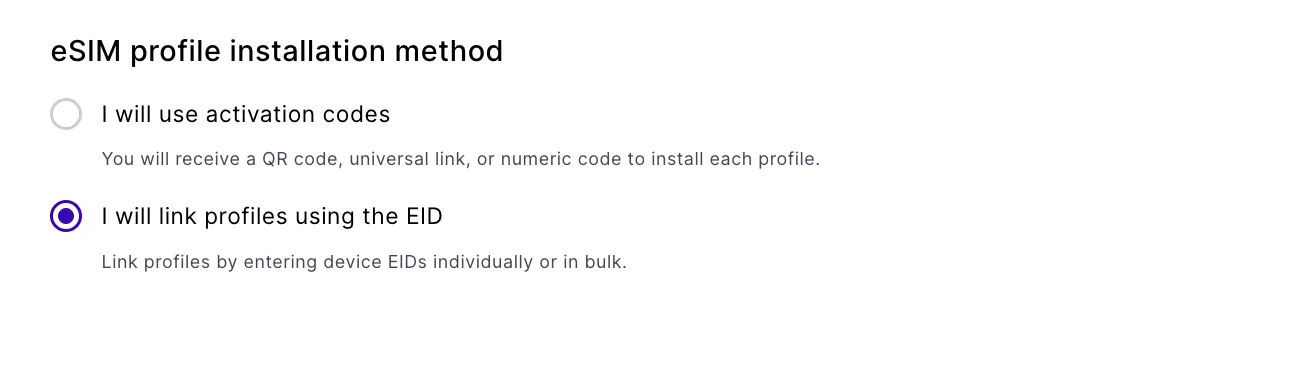
At checkout, choose an eSIM profile installation method. This choice determines how you get each profile onto a device, and what the order download contains.
- I will use activation codes: you receive a QR code, universal link, or numeric code to install each profile.
- I will link profiles using the EID: you link profiles by entering device EIDs individually or in bulk.
The order download follows this choice. With activation codes, the CSV contains the ICCID, activation code, and Apple Universal Link for each profile. With EID linking, the CSV contains the ICCID only. QR code images are never included in an order download. Retrieve them per device from the eSIM tab in Connected Devices.
For this guide, select I will link profiles using the EID.
Step 4: Assign EIDs to your eSIM profiles
Before your MDM can download profiles to devices, you need to assign each device’s EID to an eSIM profile in the emnify Portal. Export the EIDs of your enrolled devices from your MDM, then assign them one at a time or in bulk from a CSV file.
For the full procedure, see Assign EIDs to eSIM profiles.
After the emnify SM-DP+ processes the assignment, the profiles move to Ready to download. Your MDM can download only profiles in Ready to download status.
Step 5: Activate your eSIM via Microsoft Intune
Before sending the activation command, make sure:
- Selected devices under the device list are ON, and
- Devices are connected to Wi-Fi or cellular
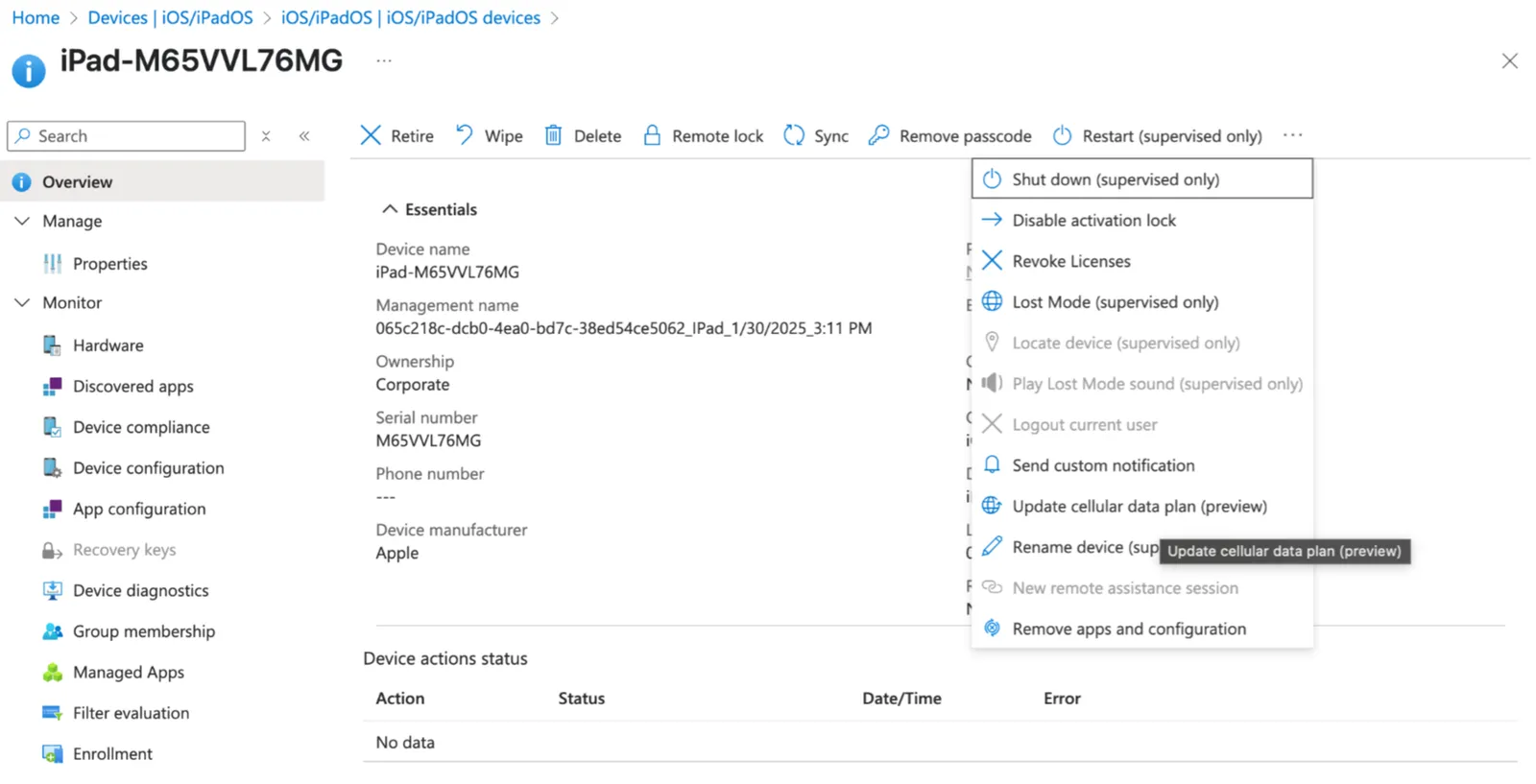
Microsoft Intune supports eSIM activation through its Update cellular data plan remote action for iOS and iPadOS devices. For more information, see Update cellular data plan for iOS/iPadOS devices.
Activate a single eSIM
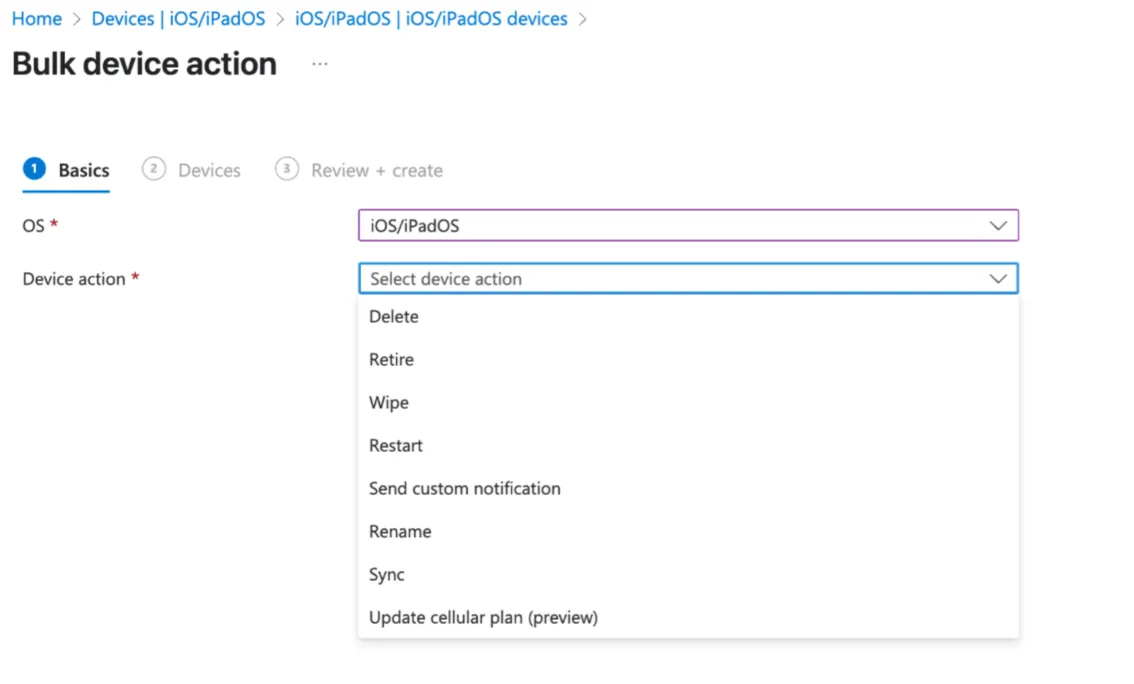
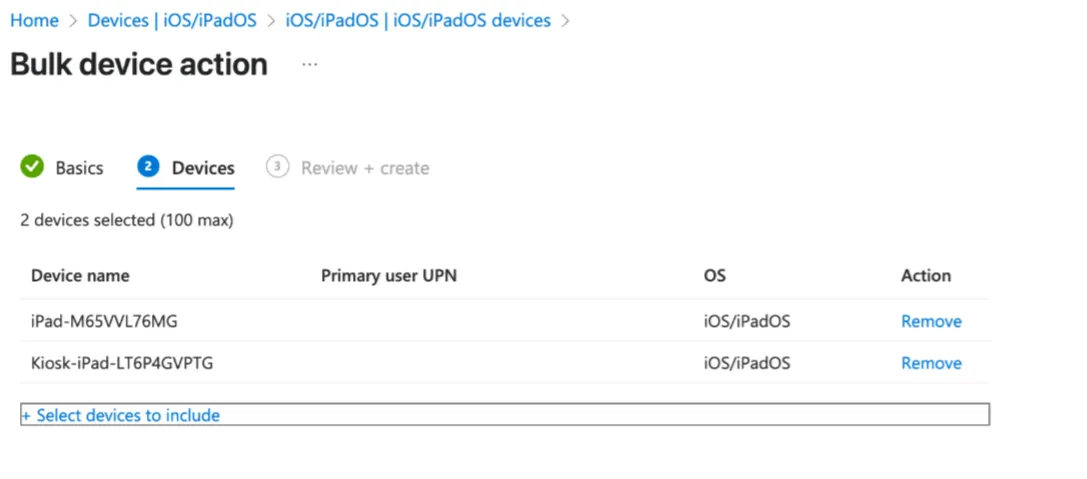
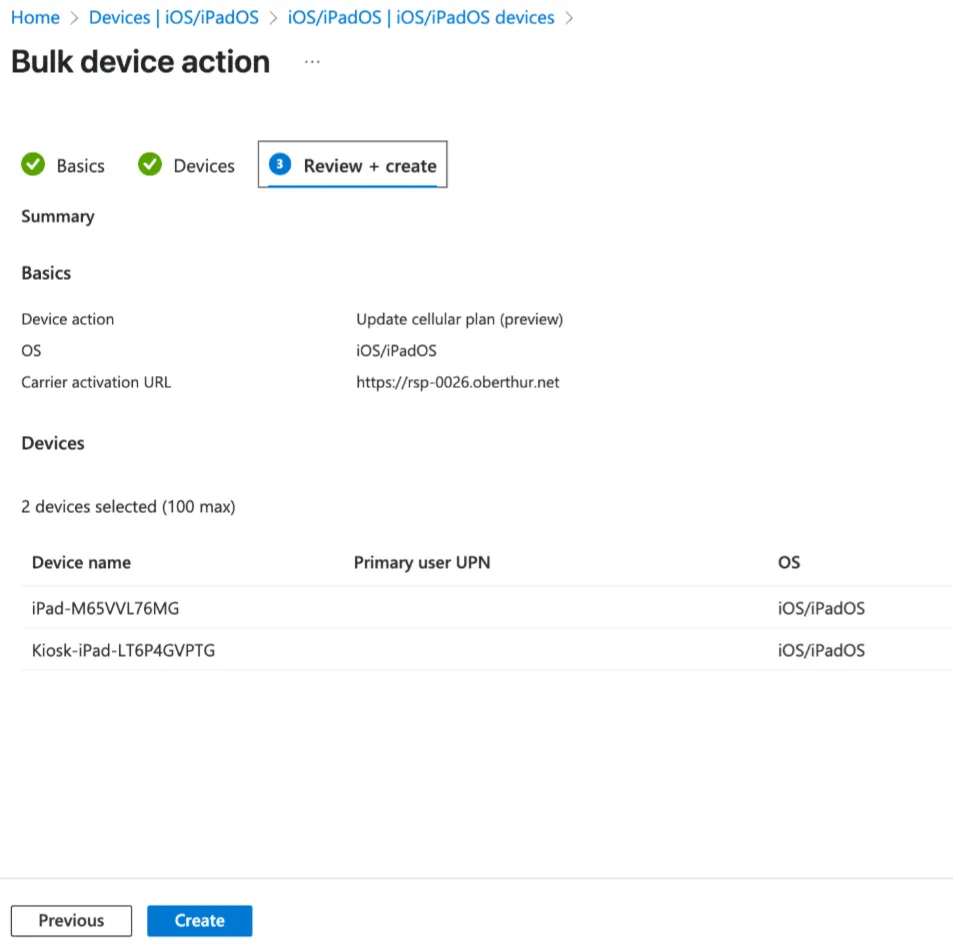
Activate multiple eSIMs in bulk

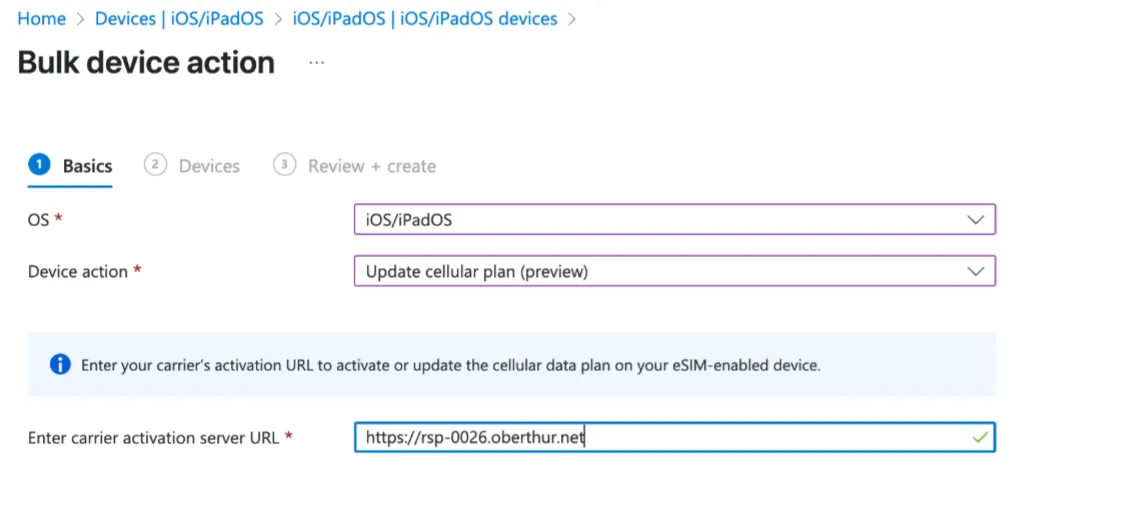
Enter the emnify SM-DP+ URL in Enter carrier activation server URL: https://rsp-3128.idemia.io
Then, click Next.
Step 6: Configure the APN on the device
After activation, the Access Point Name (APN) must be set to em.
Once the APN is set, the device establishes data connection. You can verify by browsing the internet or streaming videos.